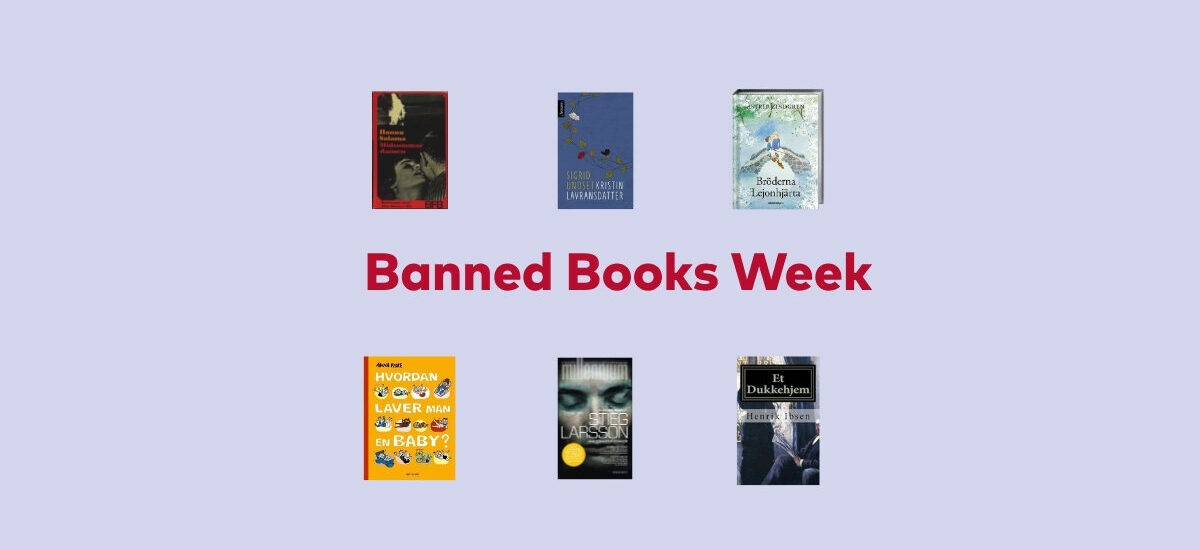
Banned Books Week is an annual event that highlights censorship and celebrates free access to literature and information. The event has been held in the US since 1982, originating as a response to growing censorship and the banning of literature in schools, bookstores and libraries.
Just as important as celebrating freedom of expression is raising awareness about the threats facing it. Throughout history literature has been banned for various reasons. A recurring argument is that children need to be protected from “inappropriate content” or propaganda. The genres most frequently targeted are sci-fi, fantasy and queer literature.
Some well-known examples of banned books include Persepolis by Marjane Satrapi, 1984 by George Orwell, Harry Potter by J.K Rowling and Beloved by Toni Morrison.
Although the Nordic countries have strong constitutional protections for freedom of the press and speech, we should not assume that we are immune to what is happening elsewhere in the world. Nordic books and authors have also faced censorship or attempts at it; these are presented below. The books are available to borrow at the Nordic House. Through Banned Books Week we aim to help keep freedom of expression alive.
Nordic books and authors subjected to censorship
How do you make a baby? – Anna Fiske
The book has been banned in school libraries in the US because it was deemed pornographic.
The Brothers Lionheart – Astrid Lindgren
In former Czechoslovakia, the book was not allowed to be published because it was considered to inspire the people to rebel against the authorities. Despite this, it was smuggled into the country and translated.
The Girl with the Dragon Tattoo – Stieg Larsson
The book has been banned in school libraries in Florida, the US.
Kristin Lavransdatter – Sigrid Undset
All of Sigrid Undset’s books were banned in Nazi Germany due to her ant-nazi stance.
A doll’s house – Henrik Ibsen
The work faced criticism from its time, primarily due to the ending in which Nora leaves her family. In Germany, an alternative ending was written because the original was considered to undermine family morality.
Juhannustanssit (Midsommardansen) – Hannu Salama
The book caused a stir due to its attack on Christianity. Salama was charged with blasphemy and sentenced to three months in prison.